

Absolutely Nothing
Thoughts and questions at a grim moment


Our nation is in the midst of a change in identity.
In the moment between knowing who we were and knowing who we’ve become, we have absolutely nothing. We are irresolute.
In a moment of such confounding ambiguity, we can sometimes find clarity in the dark.
I doubt Charlie Kirk imagined his death would create such an interesting moment for American society and culture. How we talk about it and make sense of it is something like a decency test.
Our answers to that test are not good so far. We may be gaining clarity, but it only makes more crystalline the sickness and division gripping us.
There are two things I am noticing today that make me grimace. Two things that expose how indecent we’ve become. How coarse, hypocritical, and judgmental we’ve become, as we mimic some of the worst tendencies of our political class.
First is the way Charlie Kirk’s words are being used.
Yes, he said some eyebrow-raising things in his 31 years. He said many things I don’t think he should have said. He said some things I consider indecent.
In moments when families were grieving the loss of children to gun violence, Charlie said we had to accept avoidable deaths as the price of freedom. Even avoidable child deaths.
Here’s the thing. If you think it was wrong of him to say that, then you must know it’s wrong for you to spit those same words in the direction of his grave as an “I told you so.”
Indecent words are indecent, no matter who is mentally or emotionally injured or targeted by them.
When someone throws those words back at Kirk the day after his death, they’re suggesting he got what he deserved.
They’re saying because he used callous words and thought callous thoughts, he deserved to widow his wife and leave his daughters fatherless.
To say someone deserves something is to justify it. But you know what justifies using violence to silence Charlie Kirk and end his life prematurely?
Absolutely nothing.
If you’re one of those people using a dead man’s words against him, realize that he can’t hear you. His family can hear you. People who respected and held affinity for him can hear you. But he can’t.
What you’re doing is for your own benefit. To vindicate or at least express your own emotions. And I’m not suggesting you shouldn’t vent.
But a self-serving act should be private. Keep your emotions to yourself. Tell your Aunt Edna how you feel over dinner.
Share your reason and empathy instead.
By making your caustic emotions public, you strike the flint of enmity in others. You risk that flint sparking the tinder of long-held frustration and creating a blaze of indecency. A blaze of hate. You risk making violence more likely to recur and multiply.
So I suggest that if you’re out there dabbling in schadenfreude, you need to have a talk with yourself. Something isn’t quite right.
But here’s the other thing.
I see many people expressing deeply-felt pain at the death of Charlie Kirk. Grieving. They’re sullen and demoralized that someone would do something so senseless and craven.
But there’s an interesting and obscene wrinkle jutting jaggedly from such soft expressions.
Many of the same people, some public figures and others simply characters in my life circle, expressed no shock, no sorrow, no horror when a madman mowed down 26 innocent people at Sandy Hook in 2012.
Nor have they openly wept or expressed condolences for any of the 279 children killed by gunfire in schools in the years since.
Many of them joined in figuratively pissing on the grave of John McCain, an American hero who deserved nothing but our gratitude. Some didn’t join, but lithely acquiesced in sinful silence.
I’ve watched many people who today are rightly and honestly and understandably upset by the death of someone who resonated with them react to school shootings by descending into a defensive crouch to protect what they held most dear in those moments. Not fellow human beings, dignity, or humanity, but the freedom to keep and bear firearms.
The inconsistency of grief suggests it’s only activated when it intersects with cherished views or beliefs. That’s not how grief works, at least not properly. It’s more akin to sociopathy.
You needn’t be a champion or opponent of the Second Amendment to understand the implication of a narrative that skips grief and swerves empathy to dive immediately into why child deaths must be accepted.
You know what makes a child’s violent death acceptable?
Absolutely nothing.
If you’re sad for Charlie Kirk but you weren’t sad for children claimed by the same species of violence, you’re not as good a person as you think.
You’re no different from the bile-spouting epithet merchants dominating social media outlets at this moment. You’re just more subtle and deceptive, or perhaps more afflicted by a sickness of faux conscience.
And you are also striking flint every time you make cold-blooded policy arguments in totally inappropriate moments and in totally insensitive ways.
If dead kids don’t stir a bottomless sense of abysmal anguish and soul-tormenting distress within you, then I suggest you need to have a talk with yourself. Something isn’t quite right.
There is no place for politically motivated violence in our society. It doesn’t become more okay when it finds a favorable angle of intercept with something we think or believe or feel.
If you’re persuaded to the contrary, you must not understand where the cycle of political vengeance leads.
It leads to your doorstep. And then it kills you.
Vengeance is a cycle that destroys whole towns, cities, and nations. Whole worlds. Hatfields and McCoys. The Troubles. The Balkans. Israel-Palestine.
Blood, misery, heartbreak, and dehumanization. It ends with mass graves, rubble, and unspeakably macabre perversions. It is a straight line to Hell.
We humans are violent by nature. When we allow ourselves to be governed by law and community and compromise, we coexist in tranquility. We govern power with reason. We establish and obey norms that hold us together in an unwritten contract to refrain from harming one another when we disagree.
This is what allows us to enjoy free expression. To challenge one another. To challenge our government. To self-determine. To feel liberty. To gallop through this world loosely bridled but largely unbroken. To debate what’s best for us as a whole. To enjoy stable expectations and a relative sense of safety that allows us to think and experience joy instead of being preoccupied with paralytic fear.
Most of the world lives in fear. Are we next?
We must never forget that disavowing violence and committing to solving problems peacefully is what allows liberty to thrive. We must stop cheapening this.
Because if we can’t speak freely without fear of violence, and we can’t disagree without escalating to violence, we will give in to our nature.
That’s when war comes. We humans are violent by nature. War is finishing school.
Most of all, we must stop listening to people who give us the false choice between hating “the other side” and being free.
They tell us we must pick sides. But we mustn’t. Because picking sides only ends one way.
See, we have the ability to break the cycle of political vengeance. It’s not easy, but it’s simple. We’ve done it many times before. So have others.
Sometimes, we’ve seen sense before wandering too far into the tall weeds. Other times, we’ve needed to be shocked to regain lucidity.
Twenty-four years ago tomorrow was a special day in American life. One of the best and worst days we will ever have.
It was the day after we were sucker punched. We were uncertain and vulnerable and sullen. Both pissed off and scared.
But we were seldom more collectively determined.
For a moment, we were together. Totally unified by the presence of an external threat. The divisions of the Clinton years and a contested election melted away instantly. Differing ideologies were still there, but demoted to their proper place in our national consciousness. We had bigger problems, and we worked together to attack those problems.
We’d been shocked into unity.
The moment was brief. Our politicians pissed away that unity by politicizing September 11th and the wars that followed. Lies piled upon lies. We grew cynical once again. We also grew lazy and indifferent. Powerlessness gave way to apathy instead of civic activism.
We got punched in the amygdala so many times we were somehow both numb to it and addicted to it simultaneously. The dissonance became so skull-crushing that it gave way to mass confusion and latent hysteria. We lost track of what to believe, choosing to believe nothing or everything, then what seemed most comforting in a time of discomfort.
Twenty years later, we crawled out of war drenched in futility, wracked with debt, and far more divided than we’d been on September 10th, 2001.
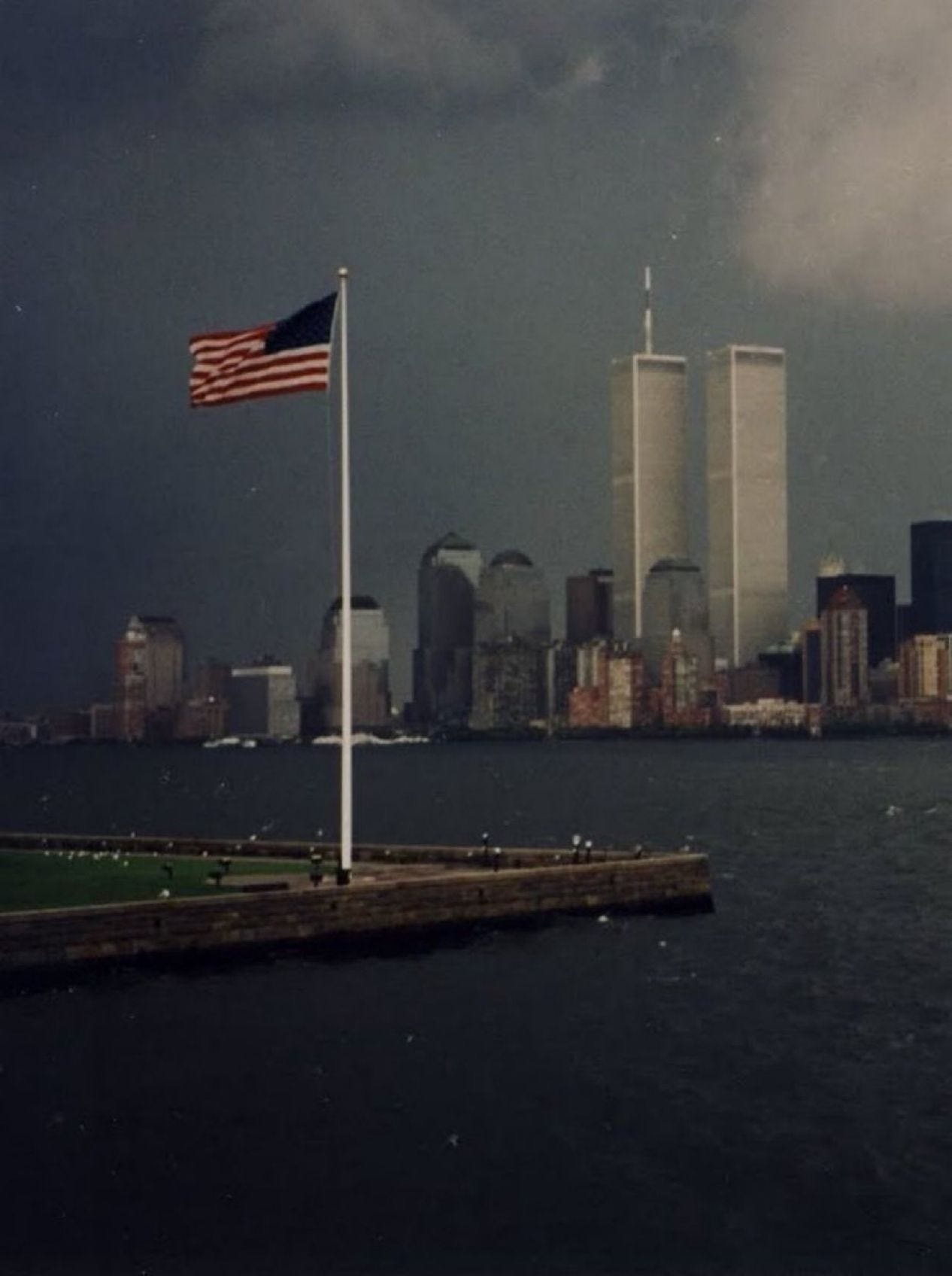
And yet, we proved along the way that we are capable of unifying when we choose to do so.
But we have to decide together.
By together, I mean all of us have to decide to find and stand on common ground. We have to stop taking enjoyment in mocking, embarrassing, and “owning” those who differ from us.
Stop initiating every conversation with what we disagree upon, which leads to entrenchment. Start instead with what we can agree upon, which breeds consensus.
It’s a collective action problem. Because we can’t reach a peaceful end to the cycle of political vengeance without both sides being willing to go there together.
How do you think things end when one “side” tries to force everyone to live, think, feel, and reason a certain way? Do you think that ends with everyone saying “gee, that sounds really persuasive … so yeah, I will change my beliefs, thoughts, and feelings voluntarily.”
Nope.
It ends with heel-dug resistance. It ends with a spiral of escalating retaliation. One side will never get the other side to obey. That’s fascism. The way fascism ends is that the portraits of those who led it get un-hung and those who led it get hung.
Americans will never be subjugated. It’s farcical to think otherwise. They will claw their own eyes out, soon as they finish clawing out everyone else’s.
So we need to stop preaching and coercing and manipulating … and start collaborating, persuading, and compromising.
That’s not a “soft” view. It’s a sensible and pragmatic one. It’s one that yearns for the tranquil society we were founded to inhabit. The one our government, which we are responsible to own and operate, is there to protect.
Each of us is entitled to our own views.
Each of us is not entitled to our own facts.
It is a fact that Charlie Kirk was murdered.
It is a fact that is sad and shameful.
Can we make sense of it without tearing each other apart? Can we make sense of it at all? Can we talk to one another at an acceptable temperature and in an acceptable tone by resisting the disgusting injection of shit-stirring by the alleged adults we somehow elected to represent us?
It’s not clear we can. But we must.
Because we can only strike flint so many times before a blaze of uncapped, atomic fury erupts. Our politicians have imported the grammar and tactics and illogic of war into our public discourse. They provoke. They antagonize. This keeps us distracted while they get up to God knows what.
We have to do better. We have to show them the way out of this.
What will we have left if we fail to do so?
Absolutely nothing.
Tony is an independent writer.
Well stated, thanks. There is no question that the gory videos of the assassination that circulated had a significant impact on most reasonable people. I have recently closed all my antisocial media accounts so fortunately didn't see them. But when Minnesota House Speaker Emerita Melissa Hortman, her husband and their dog were assassinated in Minnesota for political reasons, the pool of blood they laid in was just as deadly. And the response from Utah Senator Lee to their murders was disgusting.
👏👏