

The Cobra Effect
Coercion has limits. Seems like we could use a reminder.


I.
I exchanged with a buddy recently, over a few chugged pints of Wingman IPA, fragments of old lessons on the utility of force. Things branded onto both our brain stems by miserable experiences in Baghdad and Kabul.
That which is taken by force does not stay took.
Not forever, usually not for long, and not for an instant without the blood and pain of resistance.
An ageless anecdote from the time of British colonial rule in India relates to this. It’s not precisely on point. In fact, it’s debatable whether it happened in the way it’s been rendered down the years. Regardless, the insight it yields makes the venom worth the squeeze.
II.
Sometime in the 1880s, Britain’s Viceroy in colonial India became aware of a slimy problem in Delhi, capital of the occupation.
Snakes.
Not snakes on a plane, as planes hadn’t yet been invented. Though Da Vinci had given them a lot of thought.
We’re talking garden variety garden snakes. Reptilian street toughs, if you will. The streets of Delhi were teeming with venomous cobras. They were biting random denizens, victimizing pets, and creating a scaled nuisance. Perhaps, like whip-sporting fictional palaeontologist Indiana Jones, the lord in question had an elemental fear of snakes.
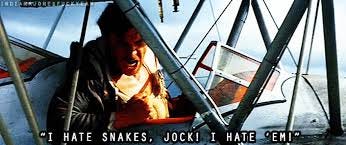
Whatever the reason, the Brits were sufficiently startled to deem the issue an urgent public health crisis.
The people of Delhi, on the other hand, didn’t deem it at all. Cobras were part of their scenery. Accepted cohabitants. They didn’t bite humans to give them a hard time. They bit out of concern, competition, or confusion. Give them a wide berth. Refrain from coveting their prey or territory. This had been the snake wisdom for aeons in a culture that existed in relative harmony with wildlife.
But to the Brits, cobras were an intolerant menace. To Hell with nature, they exclaimed, we shan’t stand idle in the presence of brandished fangs.
Western minds reacted viscerally to the exotic creatures, construing the cobra as a serious threat. Brits did what they tended to do when animated by the immense power of the Crown. They tried verbally denouncing the snakes, but soon learned their high-pitched whining was inaudible to the cobra’s drumless ears. They then tried a series of ominous hand gestures, interpreting the snake population’s motionless indifference as defiance.
So, reaching for their gleaming sceptre of power, peering down the bridges of superior noses, overlords concluded it would be savage and primitive to accept venomous creatures lurking freely in residential gardens, multiplying too easily as they writhed in the shadows. They therefore did what any self-respecting royalist culture does in such circumstances.
They attempted to pay their way out.
A bounty was offered for handing in dead cobras. This was sure to fetch the sort of skulky, machete-wielding roughhousers willing to take a bit of risk to reduce risk for others. So long as the fee made it worth their while. Long before Crocodile Dundee fearlessly flanked tourists on outback safaris, Cobra Sanjay was serially beheading hooded slitherers out back, behind his Delhi tenement.
A budget was allocated and culling began.
And for a while, it worked.
Snake hunters worked day and night to set traps and lop cobras, putting a serious dent in the population. Rank and file citizens were both grateful and a little weirded out. They enjoyed not being bitten as often. They worried about such a brazen approach to mother nature, who in their tradition was an ever victorious revenant who always bit back.
But in this case, it was human creativity that would bite back first.
After the initial success of the cull, industrious snake handlers glimpsed a commercial opportunity. They started breeding cobras solely to kill and hand them in. The cost of the programme skyrocketed. Ministers back in London hissed in disapproval.
Provincial officials, rattled by the London sneer, investigated. A closer look at the soaring bill revealed they were being had. Their ingenious plan had been hijacked by literal snake oil salesmen who were enriching themselves on Western gullibility in service of a triviality that ought to have been left lying in the grass in the first place.
So they did what powerful British overlords do. They announced an instant and summary end to bounty payouts. Basically, a few assholes had ruined a good deal for everyone. The Viceroy accepted that the cobra population would rebound, but was reassured by having done some good for some time.
But power had once again blinded him.
Not about to take the bounty revocation lying down, the snake breeders grew fangs of their own. Having farm-raised thousands of cobras that were now financially inert, the breeders summarily released them into the city. The huge quiver of cobras loosed en masse more than doubled the pre-existing Delhi snake population. Medical resources shaved during the bounty’s initial success fell behind exploding bite rates.
Brits couldn’t dismiss a problem they had previously adopted as serious. Nor could they do anything about it, having run out of resources.
Alone, afraid, machete in hand, the Viceroy seethed. His power had proven insufficient to bend the will of man or reptile. Knotted in their pits, the snakes could only chuckle. Entire families of muscle cars would further immortalize their glee in the centuries to come.
III.
“Cobra effect” is a story usually told as a warning about perverse incentives. Pressure applied to any system will find an outlet, and the incentives created by the path pressure traces through a system can backfire in ways as boundless as the human imagination.
But I read the central proposition of this story differently. I read it as a story about a powerful ruler who had become too over-reliant on his authority. So much so that his decisions presumed he could get himself out of any species of trouble by simply waving a heavy hand.
His major mistake wasn’t instituting a bounty to reduce the cobra population and watching it backfire. It was involving himself in a problem he didn’t understand, without taking good advice, and thus finding it necessary to resort to coercion to extricate himself. By the time he wielded a heavy hand, snake farmers had built up leverage, and expected the British to convert it into financial benefit. Instead, the British escalated, triggering a spiral of antagonism which swallowed the cost of the initial “problem” many times over.
The canon of strategy is clear about coercion, even if this clarity is omitted from the pretend wisdom dispensed by authoritarians and toadies.
Coercion works fine in combination with other tactics. How much it works and how it works are situational questions.
But coercion alone, or even as a first or favoured tactic, obeys sharp limitations. It is not usually effective. What we gain by it we never keep and seldom hold for long. For the time we do hold it, we endure under the pressure of resistance. Because when people are coerced, their response invariably features timeless elements of human nature and collective action.
IV.
Coercion has tight guardrails. So many that it can only travel well in a narrow space. This is intuitive given how coercion collides with the human yearning for liberty.
The main guardrails are understood by a few major themes.
Provocation. Intimidation and hammer swinging tend to piss off anyone with dignity. Pissed off people, instead of being afraid and complying, feed on rage, and react accordingly.
Legitimacy. When people surrender to coercion, it’s only because they see pressure coming from a legitimate source. But bullying a group of people into compliance instantly dilutes legitimacy, because no legitimate force should ever take anything by force. Once a deficit of legitimacy exists, friction inhabits every breath and muscle movement, hastening exhaustion.
Resolve. People and groups stiffen their spines for different reasons. Sometimes because they perceive total stakes, and must fight their hardest to survive. Sometimes because religious principles or nationalist identity are offended, implicating belief systems that cannot be surrendered without untethering from core values. Sometimes simply because disempowered people will fight hard to feel powerful again. Whatever the motivation, resolve makes coercion a cul-de-sac. Because it’s only necessary to be heavy handed when people have shown they are strong-willed, and therefore must be confronted with overwhelming force. But if they are strong-willed, coercion is likely to stiffen resolve rather than weaken it. Strong-willed resistance movements will bear massive costs that seem unbearable to aggressors, because their goals are less than total and they have the option to quit and still survive.
Credibility. When subjected to threats, people calculate the costs of resisting versus complying. Those calculations are based on the credibility of an aggressor. Can they carry through on threats? Do they have the capacity, will, and capability to do what is threatened? If the answers are less than convincing, resistance becomes more likely. One major factor impacting credibility is the resort to coercion in the first place. Strategists understand that if coercion is the only option available, a decision maker is already in a square corner of their own making. If they were fool enough to end up in such a fix, they can be outwitted again.
External Support. Resistance to coercion attracts support from enemies of enemies, who become conditional friends within the bounds of time and purpose.
There are other themes, but these are the most relevant. They are brought to life by examples, of which history provides no shortage.

V.
The Melian Dialogue. Classical Greece was all about warring city-states, and teaches us about the limits of power. In 416 BC, Athens sought to annex the neutral island of Melos during the Peloponnesian Wars. The Melian leadership refused, asserting the island’s sovereignty. Athens escalated, threatening to destroy Melos if it refused to submit. Athens did not need to own or occupy Melos. But having made the demand for submission, Athens considered its credibility at stake. Failure to carry through on its threat could project weakness and unsettle its empire. Athens therefore carried out its threat, executing the men of Melos while enslaving its women and children. A tactical victory coerced with cruelty and oppression exposed the unsustainable basis of the Athenian empire. Its adversaries were emboldened, particularly Sparta, and the empire soon crumbled from strategic exhaustion as adversaries and neutrals added friction. Athens did not fail because it conquered Melos by force. Athens failed because it put itself in a position requiring coercive force to protect its interests.
The Intolerable Acts. Parliament in 1774 passed laws designed to punish colonials for the Boston Tea Party. The coercive force of closing Boston’s port and revoking its colonial charter inspired sympathy and mutual fear in the other colonies. Rather than producing compliance, these measures heightened the feeling of injustice and royal impunity. Massachusetts soon received external support, and resistance to royal coercion became the rallying cry that unified the colonies, accelerating the path to American independence.
US Bombing of North Vietnam. The Rolling Thunder bombing campaign ratcheted pressure on North Vietnam in an attempt to coerce abandonment of support for Viet Cong revolutionaries and the goal of unification. Between March 1965 and October 1968, US aircraft dropped more aerial ordnance on North Vietnam than had been delivered in the entire Pacific Theater during WWII. The gambit failed because the leadership and people of North Vietnam were willing to bear immense costs to stay committed to their goals. Though it dragged on for a long time, Rolling Thunder started as an expedient move to shore up US prospects as it became increasingly clear the South Vietnamese could not, even with direct support and training, resist unification. The US had plunged itself into a complex problem well beyond its strategic grasp, putting itself in a position to over-rely on coercive tactics.
Soviet-Afghan War. The USSR wanted Afghanistan as a satellite state. A peaceful annexation was attempted, with the threat of force backing up diplomatic moves. Afghan leaders refused to submit, knowing the population would never accept rule by foreign power, particularly a non-Muslim one. When negotiations broke down, the Soviets made good on their threats, deploying 100,000 troops. Given its firepower advantage, the USSR presumed the mere rolling of tanks into Afghan urban centres would be enough. It wasn’t. The presence of external coercion unified tribes, who leveraged support from the US and Pakistan to raise costs and nullify Soviet maneuvers time and again. Humiliating defeat punctuated a campaign of bitter loss, all flowing from the necessity of coercion after wandering too far down an ill-advised path.
1990s US/UN Sanctions on Iraq. After the First Gulf War, UN sanctions originally intended to compel Saddam Hussein to withdraw from Kuwait were kept in place. This was partially to collect reparations for the damage done by the invasion, but primarily to coerce Saddam into giving up his WMD programme. The sanctions included a freeze on all Iraqi financial assets abroad and an embargo on all imports and exports, with only medicines and humanitarian food supplies allowed in. These measures halved Iraq’s gross national product, but did not put the intended pressure on Saddam or his government. The impact was passed along to the nation’s rank and file. Hussein weaponized the oil-for-food programme to reward loyalists and punish opponents, aggravating Sunni-Shia tensions that had formerly been quelled by a combination of stern rule and economic solvency. As sanctions continued across the decade, businesses failed, employment plummeted, educated citizens fled, and the nation’s middle class collapsed. Decimation of Iraq’s social structure and national identity followed. Rather than rely on government or employment, Iraqis turned to tribal, religious, and sectarian affiliations for survival. This gave rise to local warlords who ran protection rackets and criminal gangs in what was essentially a failed state prior to the US invasion in 2003. The vacuum created by Saddam’s removal was filled by these power brokers, who mobilized clan violence and weaponized religious rivalry. The US found itself requiring compound coercive military force to pacify a resistance created by previous coercive miscues.
The Berlin Airlift. The Soviet Union sought to thwart creation of a separate West German state by coercing abandonment of West Berlin with a blockade preventing food, electricity, and fuel from reaching the city. The US responded with an aerial relief operation that soon proved the city could be indefinitely supplied by American airpower. This converted Soviet coercion into a source of Western diplomatic unity. The USSR was portrayed as a bully, while the US and its allies were saviours preventing mass starvation of two million Berliners. A muscular counter-blockade prevented trade with East Germany, which created severe supply shortages and popular unrest. Faced with the potential unraveling of its European strategy, the USSR lifted the blockade in May 1949, less than a year after implementation. But the damage was done. Not only did the success of the airlift solidify establishment of separate German states, the events catalyzed movement toward a collective security agreement among Western powers. NATO was created as a direct result. An ingenious feature of the airlift was its willingness to dare Soviet commanders to shoot down US aircraft, which would have instigated a general conflict. Soviet restraint exposed unreadiness for a military confrontation. The West knew it had the advantage, which further emboldened resistance of further aggression.
In each of these cases, the cardinal sin wasn’t resorting to coercion as a lead tactic. In each case, the primary error was upstream, in decisions that put protagonists in a position where coercion would become necessary.
In each case, their fates were sealed long before the coercive option was chosen.
In each case, resorting to coercion sent reassuring signals to adversaries about the state of their leverage, emboldening them to resist, fight, and impose staggering costs.
It’s worth noting that while it’s natural (and timely) to think about coercion as a strategic idea, it also happens in organizations of all shapes and sizes.
In around 2010, the US Air Force committed to supporting a US military initiative called “Af-Pak Hands,” which sought to create a cadre of operational leaders with linguistic and cultural expertise capable of enhancing counterinsurgency efforts in Afghanistan.

But the service failed to sound out its own membership before making a sizeable commitment to train and deploy numerous advisors on a rolling schedule, taking them away from their home units (and families) for 18 months each time.
The result was a retention nightmare. Within a few years, volunteer rosters ran dry, and the Air Force did little to create concrete incentives to entice participation. It soon found itself involuntarily selecting officers for a program requiring a deeply held belief in the validity and wisdom of the US mission, which few held. Those who refused participation were separated from service, often resulting in a dozen or more discharges to fill one assignment vacancy. The time spent churning through refusals shortened pre-deployment notice periods, further disincentivizing acceptance and traumatizing families.
In the end, the Air Force’s participation achieved nothing of consequence. It was seen by airmen, who knew with total certainty Afghanistan would not develop or sustain a modern air service, as misguided at best and cynical budget posturing at worst. The dozens of pilots who left service in lieu of putting their families through a long separation would be sorely missed in the subsequent years as the Air Force developed a shortage of aviators it could not remediate.
The mistake wasn’t forcing airmen into an involuntary assignment to a combat location under a dubious mission umbrella. That was the aggravating coercive input which tried in vain to resolve the real mistake, which was committing to a programme without first authentically assessing support for it, with a strategy to boost that support as necessary. Had Air Force leaders listened to airmen, they’d have made a smaller commitment and provided much stronger incentives.
VI.
When coercion is applied in an an uneven power dynamic, particular counter-coercive responses are triggered, and the limits of coercion are exposed.
The empowered party’s prestige, reputation, and the deterrent and dissuasive potential of the authority which made coercion tempting in the first place are immediately at risk.
Which brings us to current events.
Donald Trump was definitely absent, drugged, distracted, or asleep the day they taught strategy at President School. The knuckle-draggers lurking within his inner circle continue to supply him with advice so bad it can only be designed to get him fired or destroy the reputation and prosperity of the United States, or both.
He feels he can seize Venezuela by force and export its oil for American profit.
He feels he can annex Greenland.
He feels he can deploy federal troops into US cities and intimidate populations into compliance with extra-legal edicts of various sorts.
I say “feels” because he is clearly not thinking. A man needn’t be able to read Ulysses to foresee the inevitable consequences of taking by force that which could not be had by law, treaty, or persuasion.
The irony is that Trump’s feeling of power comes from a vocal base of supporters who invoke visions and ideals of resistance while fantasizing about extinguishing any trace of it. They seek a world where their ideological preferences have been made into stone-etched commandments, where they are invited to take and possess power and property they desire without having a valid claim, and where the penalty for disagreement is death.
Revolutionary imagery has always been wielded by authoritarians, to be sure. It’s a favoured rhetorical device.
But in this moment, the pathology seems to go beyond propaganda and misrepresentation. The evidence suggests Trump and his supporters believe the mere historical fact of America being born out of resistance entitles them to the eternal pretension and romance of being the underdog, oblivious to the reality of having become the overdog long ago.
But the confusion doesn’t end there. Not seeing themselves or their country as the bullies they and we have become, the limitations and grave backfire risks of overusing bully power lie beyond their notice.
Historical, potentially Earth-altering cataclysm draws near as a result.
Americans have long celebrated their willingness to resist and rebel. Like all rebels, we planted the seeds of our own demise during our Revolution. What emerged after the Civil War was a new version of us. But the uneasy peace which followed was based partially on founding values that were forcibly imposed on populations that never truly internalized them. So those deeply-buried seeds of demise germinated all over again. They have grown into the thicket in which we’re now lost.
But we know a lot more than we did in 1776 or 1861. We know people have to be brought along. Persuaded. Won over. Bought off with concessions, compromise, and conciliation.
Vietnam, Iraq, and Afghanistan all re-taught us the same lesson: nothing unifies a disparate population like the presence of external coercion.
Trump doesn’t get that, but we knew that already.
It’s the millions who are going along for the ride I really question. Many of them do get it. They have seen this movie and do know how it ends. They are setting themselves up to be complicit, and will be judged accordingly. By history, yes. And perhaps, depending on how far this madness goes, by tribunals. More likely, by their personal maker if they don’t act soon to sever complicity.
We’re approaching a moment of clear judgement for our system of government and its most pivotal institution -- the one meant to represent the general public. If Congress does not assert itself, it will be made redundant before our very eyes. In the world of power, a redundant object does not survive. So in that moment, seismic consequences will be set in motion.
Or, Congress will do its duty. Which at this point includes acting aggressively to check the power of a man who has clearly lost his marbles and using our nation as collateral in the machinations of a fever dream capable of dragging the world into centuries of darkness. Unchecked, he will make Medieval Agony Great Again.
When future historians sift through the embers of what was once the shining city on the hill, they will find many lessons to power the turbines of re-enlightenment. Prominent among the many shenanigans they discover will be an ignorance to the dangers of excess power that is doubly stupefying given all history has already taught us.
Power structures can be calibrated in countless ways and still achieve the same objective of peaceful symbiosis between those who consent to governance and those who exercise it. But when authority concentrates with enough purity and potency to seduce the empowered into excess self-belief, they are soon stalked by risk which restlessly awaits the false moves they will inevitably make.
Bullying, intimidation, and seizing by force are acts undertaken by the strategically inept who have already failed and just don’t know it yet
Coercion in combination with other tools and tactics can ease and hasten movement to an objective. Coercion by itself, or as the first or favoured move, is a road to ruin.
How do we know?
Snakes. Love ‘em or hate ‘em, their lessons bite with big fangs.
Tony is an American writer living in Britain. He is also a British writer who has lived in America.
Agree with you, but the Berlin airlift was not just the USA. We Brits and the French were present. My late Uncle ,ex RAF bomber pilot, was among those who flew sorties. Please don't forget the role your allies played. It was often the maximum we could do, even if our contribution looks small by comparison.